DefenceMar 14, 2026
Silent Generators for Military: Why Noise Matters
Why acoustic signature matters in military power and how hydrogen fuel cell generators deliver under 65 dBA for defence operations.
4 min read
Noise Gets People Killed
In military operations, noise is not an inconvenience. It's a vulnerability.
A standard diesel generator produces 75-95 dBA. That's audible from over a kilometer away in quiet terrain. For forward operating bases, surveillance positions, and special operations, that sound signature can compromise the entire mission.
Silent generators based on hydrogen fuel cell technology operate at under 65 dBA. That's quieter than a normal conversation.
What Makes Hydrogen Generators Silent
Diesel generators are loud because they rely on internal combustion. Explosions inside cylinders, mechanical pistons, exhaust systems, and cooling fans all produce noise.
Hydrogen fuel cells have none of this. The electrochemical reaction that converts hydrogen to electricity is completely silent. The only noise comes from small fans that manage airflow and cooling, and these operate at a whisper.
Acoustic Signature in the Field
The military measures operational noise impact through acoustic signature, the distance at which a power source can be detected by ear or by acoustic sensors.
A hydrogen fuel cell generator is effectively undetectable beyond 50 meters. This changes the operational calculus for:
Beyond Noise: The Triple Signature Advantage
Noise is only one of three signatures that hydrogen fuel cells eliminate:
Modern threat detection uses acoustic, infrared, and visual sensors. A diesel generator fails all three. A hydrogen fuel cell passes all three.
- 01
Acoustic - Under 65 dBA vs 80-95 dBA for diesel
- 02
Thermal - Minimal heat signature vs significant infrared visibility from diesel exhaust and engine blocks
- 03
Emissions - Zero exhaust plume vs visible diesel exhaust
Operational Benefits Beyond Stealth
Extended Unattended Operation
Hydrogen cartridge systems can run for 72+ hours without refueling or maintenance. Pre-position cartridges at a site and the power system operates autonomously. No fuel convoys. No maintenance schedules.
Reduced Logistics Burden
A single soldier can carry hydrogen cartridges that provide days of power. The equivalent diesel fuel weighs significantly more and requires specialized containers.
Indoor and Underground Use
Hydrogen fuel cells produce zero carbon monoxide. They can safely power underground bunkers, enclosed vehicles, and sealed facilities where diesel exhaust would be lethal.
Current Military Hydrogen Power Systems
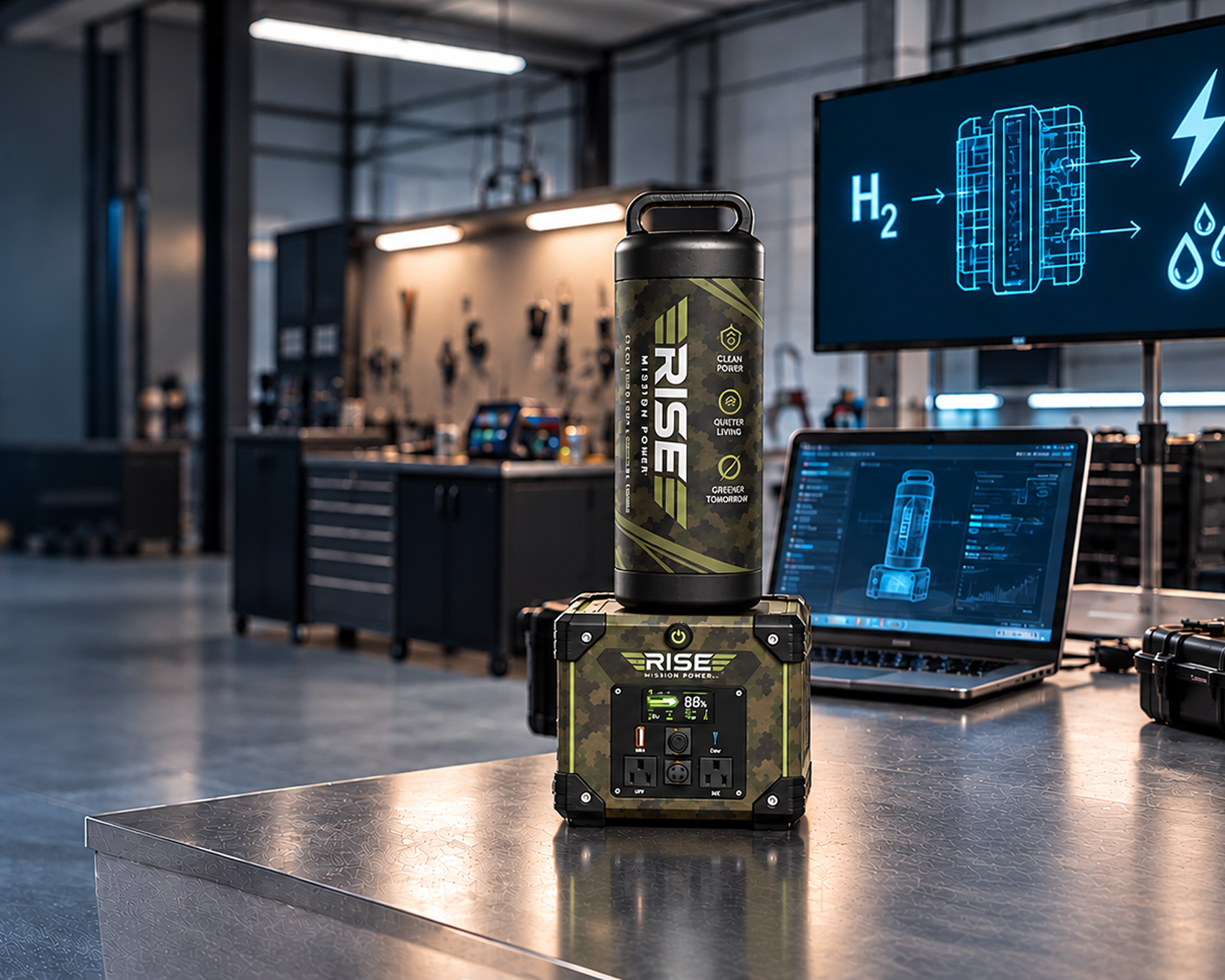
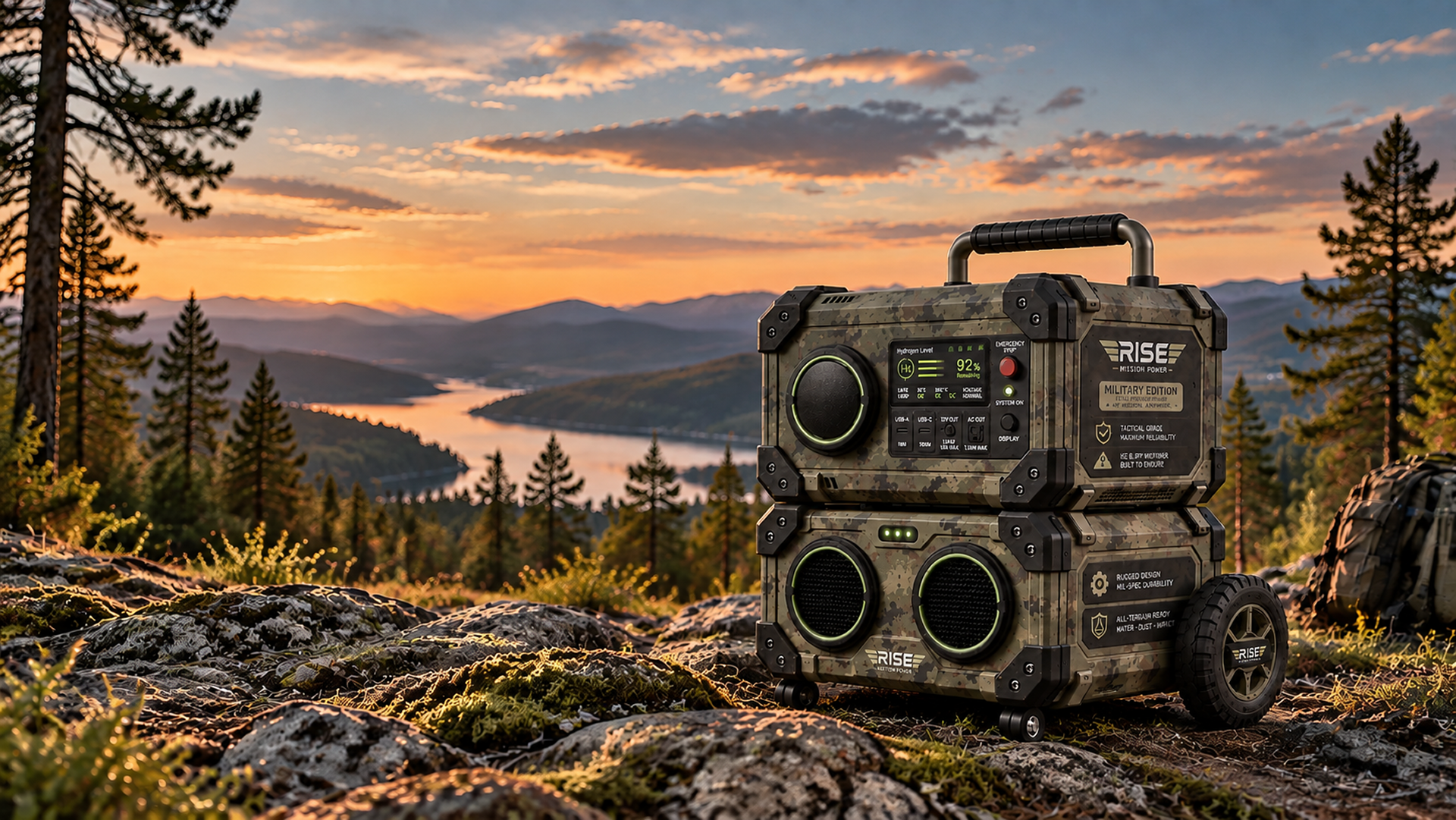
Modern portable hydrogen generators like the Rise-Titan deliver 1.5 kW of continuous power at under 65 dBA. Compact systems like the Rise-Sentinel Power Cube provide extended runtime via cartridge swap with silent operation.
These systems use swappable hydrogen cartridges with a 15-year shelf life, enabling pre-positioning at forward sites without fuel degradation concerns.
FAQ
What military applications use silent generators?
Silent hydrogen generators are used for forward operating bases, surveillance and reconnaissance positions, special operations, drone ground control stations, communications equipment, and command posts. Any application where noise compromises the mission benefits from silent power.
Can hydrogen fuel cells power military communications equipment?
Yes. Hydrogen fuel cells provide clean, stable DC power that is well-suited for sensitive electronics including radios, satellite communications, encryption equipment, and computing systems. The absence of vibration and electrical noise from combustion engines improves signal quality.
How do hydrogen cartridges compare to diesel fuel for military logistics?
Hydrogen cartridges are lighter per unit of energy, have a 15-year shelf life (vs 6-12 months for diesel), don't spill or contaminate, and can be pre-positioned at sites years in advance. They eliminate the need for vulnerable fuel convoys.
Are hydrogen generators ruggedized for field conditions?
Yes. Field-ready hydrogen fuel cell generators are designed for operational environments including extreme temperatures (−22°C to +50°C), dust, rain, vibration, and rough handling during transport and deployment.
Related