
ResourcesMar 7, 2026
Zero Emission Portable Power: Complete Guide
Explore zero emission portable power options including hydrogen fuel cells. Compare technologies, use cases, and real-world performance.
4 min read
What Zero Emission Portable Power Means
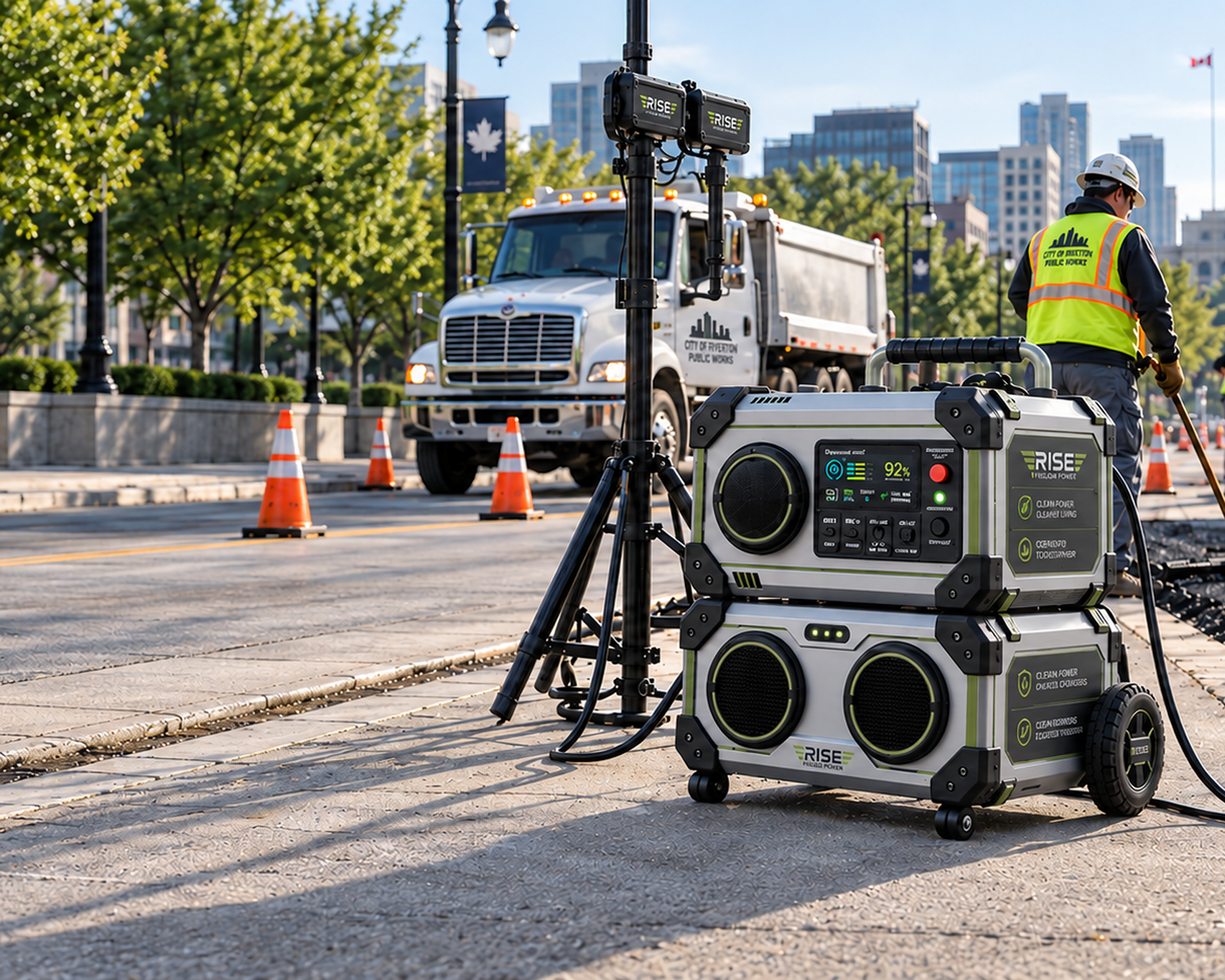
Zero emission portable power produces electricity without releasing greenhouse gases, particulate matter, or toxic exhaust at the point of use. The two main technologies are batteries and hydrogen fuel cells.
Both qualify as zero emission at the source. But they serve very different use cases when portability, runtime, and weight matter.
Technology Options Compared
Lithium-Ion Batteries
Portable battery packs store energy and release it on demand. They work well for short-duration, low-power applications.
Best for: Phones, laptops, small electronics, short field operations (under 8 hours)
Limitations: Heavy for extended runtime. Capacity degrades over charge cycles. Slow to recharge. Performance drops significantly in cold weather.
Hydrogen Fuel Cells
Hydrogen fuel cells generate electricity from hydrogen fuel. They run as long as fuel is available and refuel in seconds via cartridge swap.
Best for: Extended operations (24-72+ hours), military and defence, disaster response, remote sites, and any application where recharging isn't practical.
Limitations: Higher upfront cost. Requires hydrogen fuel supply chain.
Solar Portable Power
Solar panels convert sunlight to electricity. They're truly zero-fuel, but entirely dependent on weather and daylight.
Best for: Supplemental charging in sunny conditions. Trickle charging for low-power devices.
Limitations: No power at night. Intermittent output. Low power density. Large surface area needed.
Comparison Table
The Weight Problem for Extended Operations
Weight is the defining constraint for portable power. Here's why hydrogen wins for extended runtime:
A lithium battery pack delivering 200W for 24 hours weighs approximately 80 lbs. For 72 hours, that's 240 lbs of batteries.
A hydrogen fuel cell system delivering 200W weighs about 15 lbs for the unit plus 5 lbs per cartridge. Three cartridges for 72+ hours totals roughly 30 lbs.
The longer the mission, the greater the weight advantage of hydrogen.
Use Cases for Zero Emission Portable Power
Defence and Security
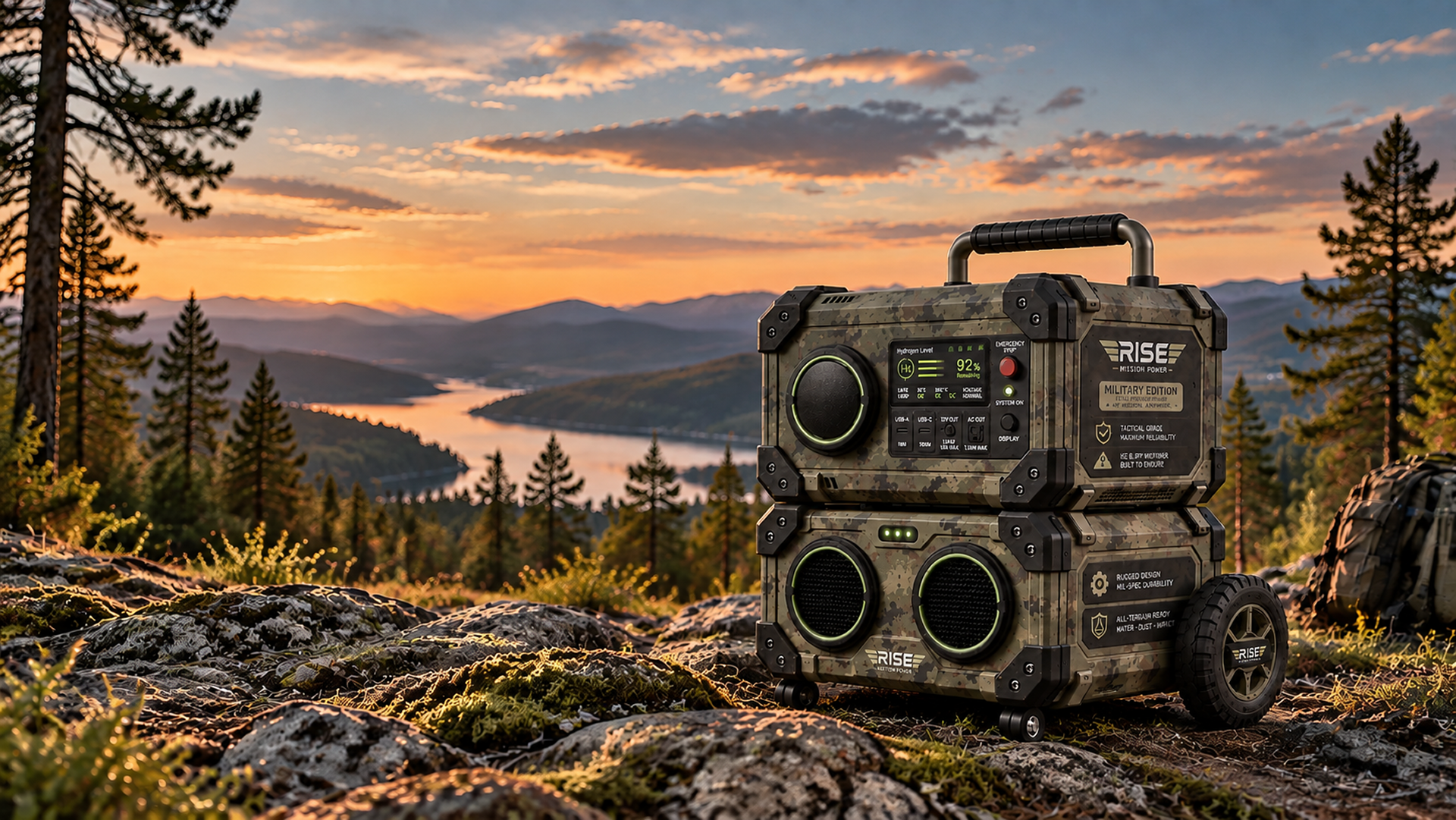
Military operations increasingly require zero-emission power for operational security. Diesel exhaust creates visible and thermal signatures. Zero emission systems eliminate this vulnerability while also reducing noise.
View defence power use cases
Disaster Response
Emergency responders need power that works indoors. After hurricanes, earthquakes, and floods, diesel generators pose carbon monoxide poisoning risks inside damaged buildings. Zero emission portable power saves lives by enabling safe indoor operation.
Remote Environmental Monitoring
Weather stations, wildlife monitoring, and environmental sensors in protected areas need power without pollution. Solar works in some locations, but hydrogen fuel cells provide reliable 24/7 power regardless of weather.
Film and Events
Outdoor film production and events are increasingly required to reduce emissions. Hydrogen fuel cells provide silent, clean power for lighting, sound, and equipment.
How to Choose
Ask these three questions:
For most professional and military applications requiring 24+ hours of portable power, hydrogen fuel cells offer the best combination of runtime, weight, and reliability.
Explore Rise Power solutions
- 01
How long do you need power? Under 8 hours, batteries are fine. Over 24 hours, hydrogen wins on weight.
- 02
Can you recharge? If you have grid access overnight, batteries work. If not, hydrogen is self-contained.
- 03
Does noise matter? Both are quiet, but hydrogen fuel cells at under 65 dBA are the quietest option for higher power output.
FAQ
What is the quietest zero emission portable generator?
Hydrogen fuel cell generators are the quietest option for portable power above 100W. They operate at under 65 dBA, which is quieter than a normal conversation. Battery-based inverters are also quiet but limited in runtime.
Can zero emission generators power a house?
Yes. A 1.5 kW hydrogen fuel cell generator can power essential home systems including refrigeration, lighting, communications, and medical equipment during an outage. This is especially valuable where indoor use of diesel generators would be dangerous.
How long do zero emission portable generators last?
Hydrogen fuel cell systems can operate for 72+ hours on a set of cartridges and run indefinitely with cartridge swaps. The fuel cell stack itself has a lifespan of thousands of hours. Battery packs last 2-12 hours per charge depending on capacity and load.
Are zero emission generators reliable in cold weather?
Hydrogen fuel cells operate reliably down to −22°C. Lithium batteries lose 20-40% of their capacity in cold conditions. For cold weather operations, hydrogen fuel cells are the more reliable choice.
Related